Most homeowners and interior designers overlook a core quality control metric when shopping for solid wood mosaic accent walls: wood moisture content (MC). The universal industry standard for premium finished wood finishes stabilizes moisture content between 8% and 12%. This value directly determines whether panels will crack or warp, shapes installation outcomes and service life, and serves as the key benchmark separating low-grade wood wall products from precisely crafted solid wood panels.
I. Problems Caused by Off-Standard Moisture Content
Moisture Content above 12%: Excess internal moisture inside lumber. After installation in dry indoor environments, the wood rapidly loses water and shrinks, triggering widespread issues including widened wall gaps, warped panels, and cracked surface coatings.
Moisture Content below 8%: Over-dried lumber with minimal internal moisture. When exposed to rainy humid seasons or damp surroundings, the wood quickly absorbs moisture and swells, leading to bulging wall surfaces and raised joints, which result in frequent after-sales repair work.
The 8%–12% range is the optimal moisture window suited for indoor environments across most regions of China. It balances seasonal temperature and humidity fluctuations between northern and southern climates, effectively minimizing deformation damage to solid wood walls while enabling smooth installation and superior long-term dimensional stability. All hardwood mosaic panels from our factory undergo constant-temperature equilibrium drying to lock moisture content within the standard range. The three mainstream styles below have all completed stress relief treatment, making them reliable choices for both residential and commercial projects.
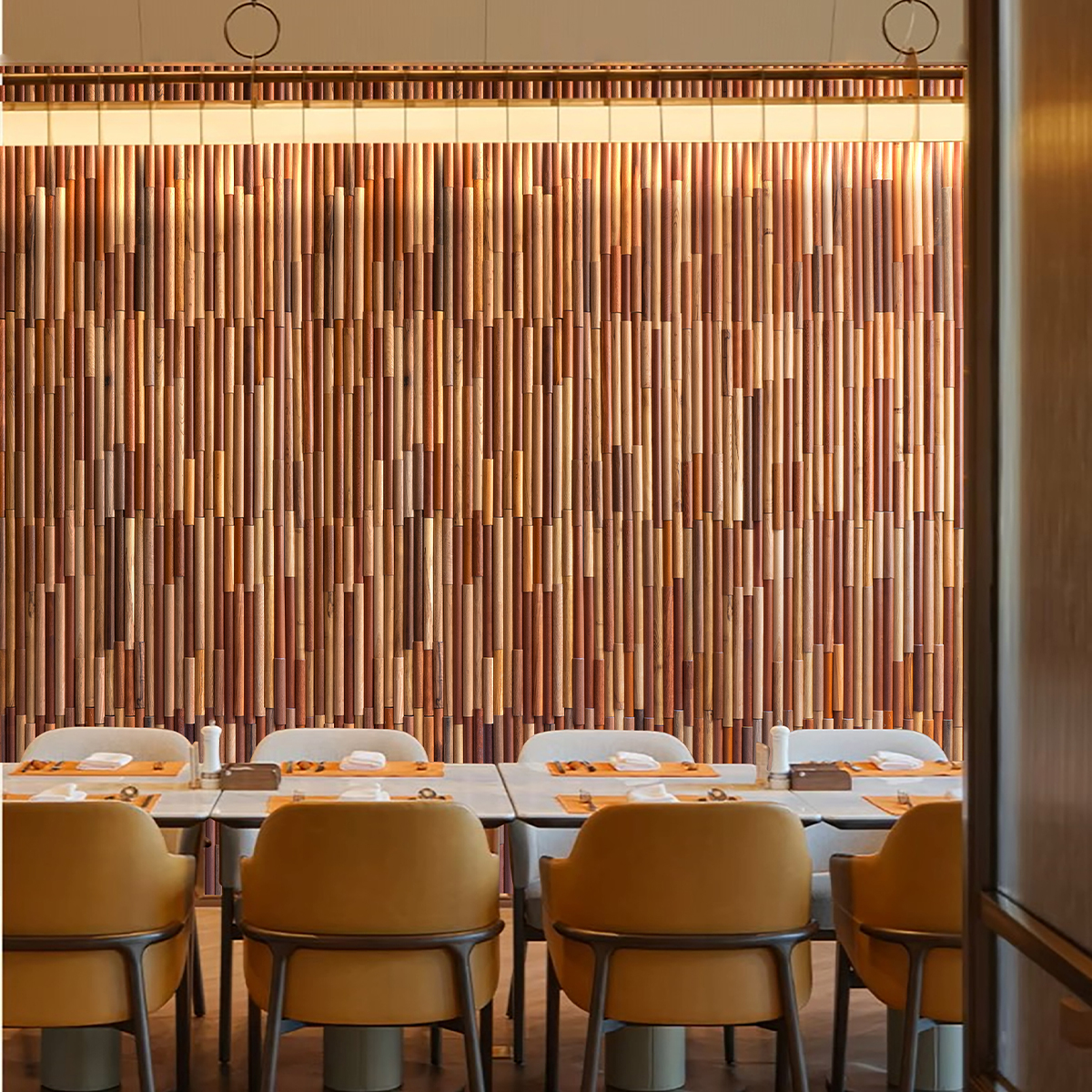
Hardwood Half-Round Slat 3D Solid Wood Mosaic Accent Wall
Entire batches of raw lumber are uniformly dried to standard moisture levels for consistent structural stability. Continuous half-round slat splicing delivers even, uniform gaps; poor moisture control would easily bend thin slats and ruin the wall’s neat linear aesthetic. Panels with compliant moisture levels resist edge warping and cracking amid seasonal humidity shifts, long-term direct air conditioning airflow, and routine cleaning. The minimalist slatted design works for living room and office accent walls, retaining a smooth, refined appearance for years.
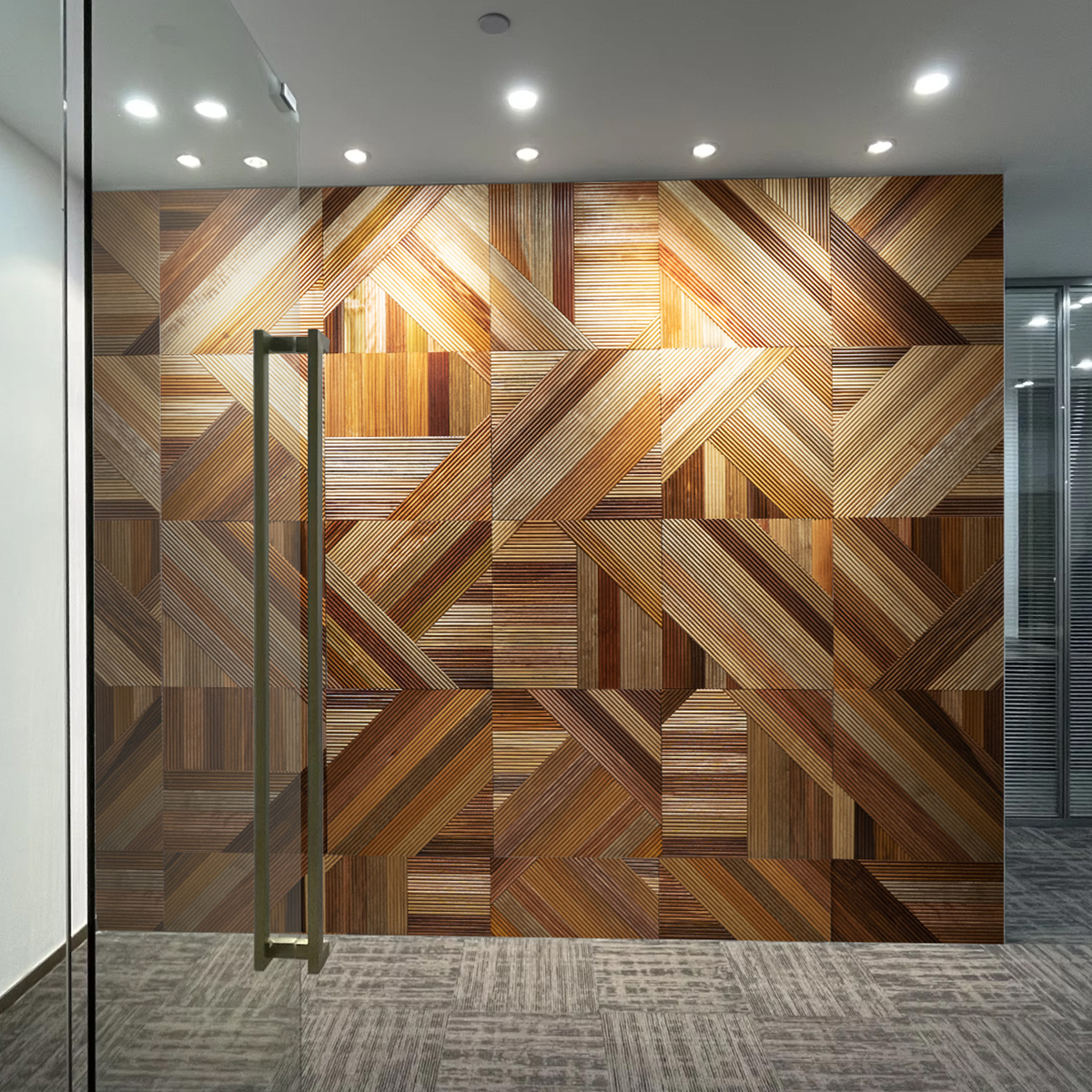
Hardwood Diagonal Splice 3D Solid Wood Mosaic Accent Wall
Diagonally spliced panels feature more contact surfaces between pieces, creating stricter requirements for consistent moisture content. The 8%–12% standard ensures uniform shrinkage and expansion across every piece, maintaining tight, seamless joints without localized gaps or uneven wall surfaces. Low-cost market alternatives with unregulated moisture content develop obvious gaps within roughly six months of installation, ruining the overall visual effect. This textured panel requires almost no touch-ups after installation in bedrooms, tea rooms and home theaters, offering reliable, low-maintenance performance.
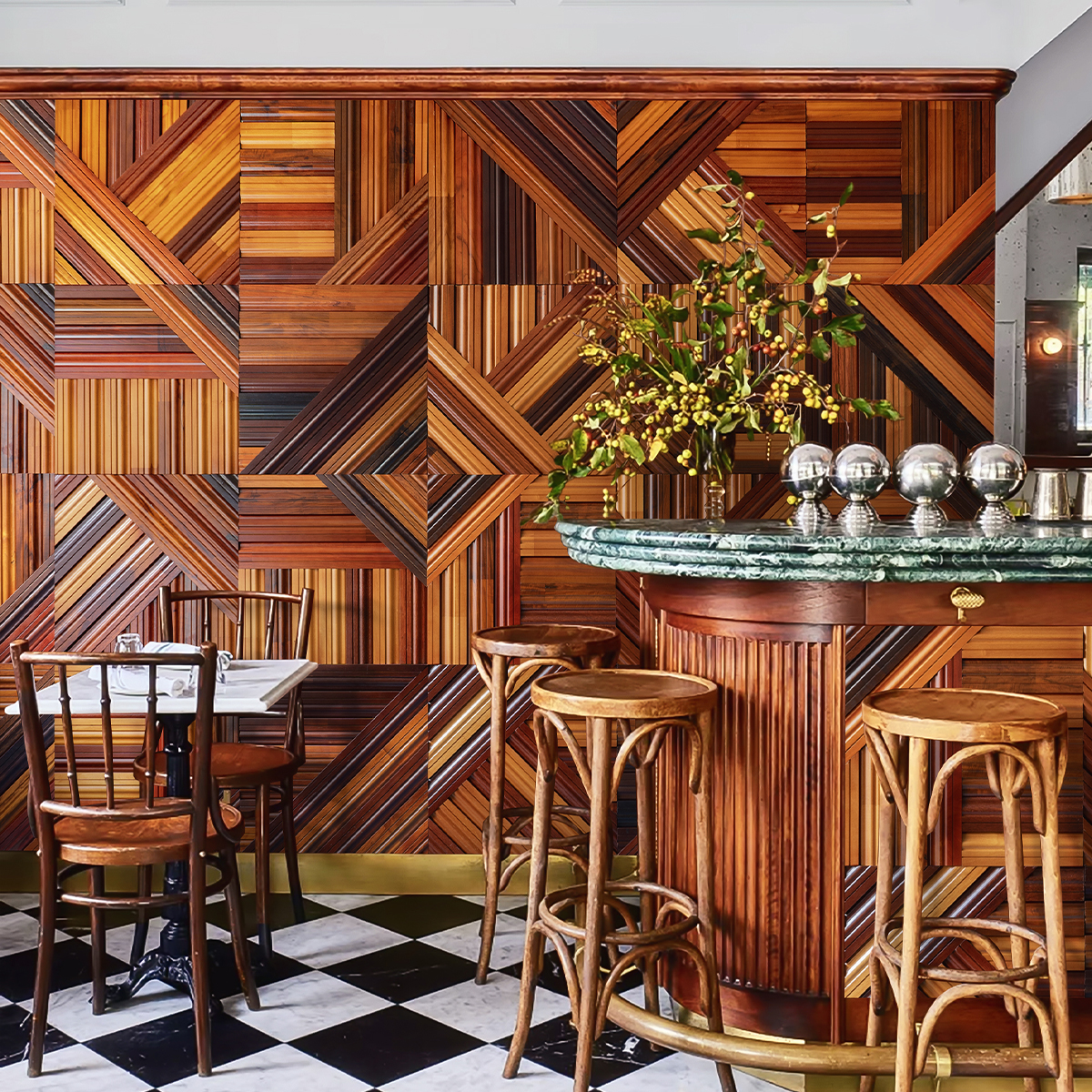
Hardwood Half-Round Diagonal Hybrid 3D Solid Wood Mosaic Accent Wall
This hybrid design combines curved half-round and diagonal cut timber. Imbalanced moisture content would immediately distort curved arcs and misalign spliced joints. Before shipment, panels go through constant-temperature conditioning to stabilize moisture within the standard bracket and fully release internal wood stress, preserving intact curves and seamless joints. Suitable for all climates nationwide, it resists swelling in southern humid summers and shrinkage cracking during northern heated winters, drastically cutting long-term maintenance expenses. The design matches all residential and commercial interior styles.
II. Core Installation Advantages of 8%–12% Standard Moisture Content
Flawlessly even wall finish: Uniform expansion and contraction rates eliminate the need for overly wide expansion gaps, delivering a cohesive, seamless visual result.
Nationwide climate adaptability: Resists swelling in southern rainy seasons and shrinkage in northern heating seasons.
Faster construction speed: Pre-conditioned lumber arrives installation-ready, eliminating on-site humidification or drying adjustments to shorten construction timelines.
III. Long-Term Benefits of Standardized Moisture Content
Eliminate common solid wood wall defects at the source: Greatly reduce cracking, warping, bulging and gap widening.
Preserve paint and wood oil topcoats: Stable internal wood moisture strengthens coating adhesion to prevent peeling and flaking.
Extended service life: Fully relieved internal stress maintains panel structural integrity, preserving original textures and profiles for over a decade.
Low maintenance threshold: No year-round dedicated humidification or dehumidification required; simple regular dusting suffices for upkeep.
Many low-cost wood finish products skip constant-temperature drying and equilibrium conditioning processes, lacking moisture regulation. While they carry lower upfront purchase costs, they incur high repair and rework expenses down the line. When selecting solid wood mosaic accent walls, prioritize hardwood panels stabilized to 8%–12% moisture content with complete drying and conditioning workflows. This eliminates installation risks at the source while delivering outstanding visual appeal and dependable long-term stability for your space.