When purchasing solid wood mosaic accent walls, most buyers only examine the front grain pattern and shape, ignoring core factors that determine service life and final installation results. While wood species form a basic foundation for issues like cracking, peeling paint, fading, warping and hollow detachment, the real dividing line between high and low quality lies in topcoat finishing and backing structural craftsmanship.
Low-cost inferior products on the market only receive basic sanding and a thin coat of paint, with drastically simplified backing procedures. They look acceptable right after installation but quickly develop warping, glue separation, cloudy peeling paint and loose wood pieces, leading to frequent after-sales troubles. To avoid pitfalls, inspect both the front appearance and the underlying structural stability before purchase. Below we break down full quality control standards for premium solid wood mosaics via three representative styles, and clarify differences in rear fixing craftsmanship among the three lines.
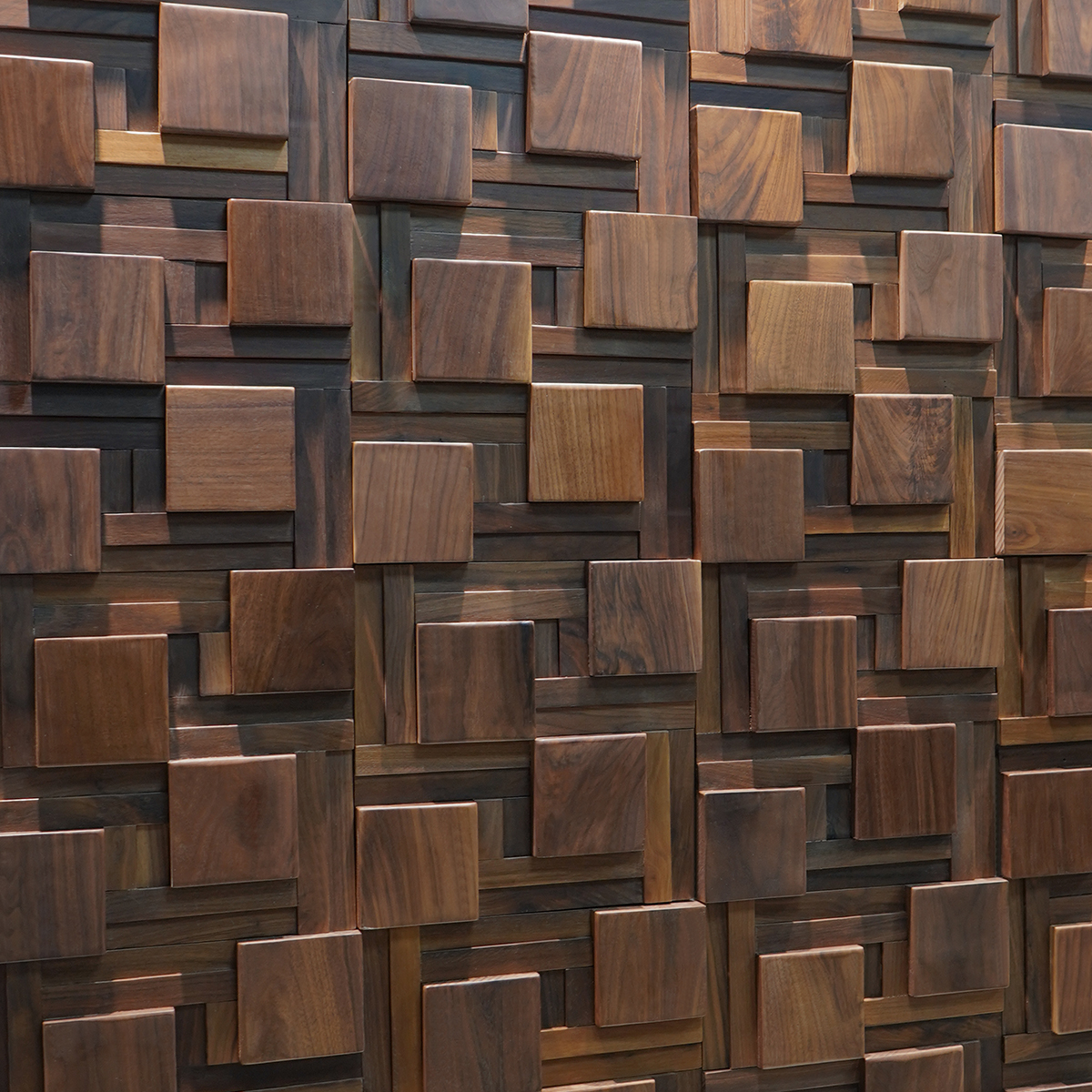
Black Walnut Large Square 3D Solid Wood Mosaic | Benchmark for High-End Craftsmanship & Structural Stability
This premium residential line demands strict machining precision and substrate treatment. The surface undergoes multiple rounds of meticulous hand sanding for a burr-free, smooth finish that fully reveals natural grain with a soft, refined tactile feel. Eco-friendly clear topcoat penetrates into wood texture instead of forming a mere surface film. It preserves black walnut’s original natural character while delivering scratch resistance, oxidation resistance and fade resistance, preventing dullness and loss of luster over years of use.
Raw lumber is kiln-dried to lock moisture content within the 8%–12% industry standard and fully release internal wood stress. A plywood backing board is applied as structural reinforcement for even force distribution, effectively preventing single-piece warping and glue separation at joints. Square cutting requires extremely tight dimensional tolerance; uniform sizing ensures consistent, neat gaps between spliced tiles. Ideal for tea rooms, main living room feature walls and upscale club spaces in luxury private residences with outstanding long-term structural stability.
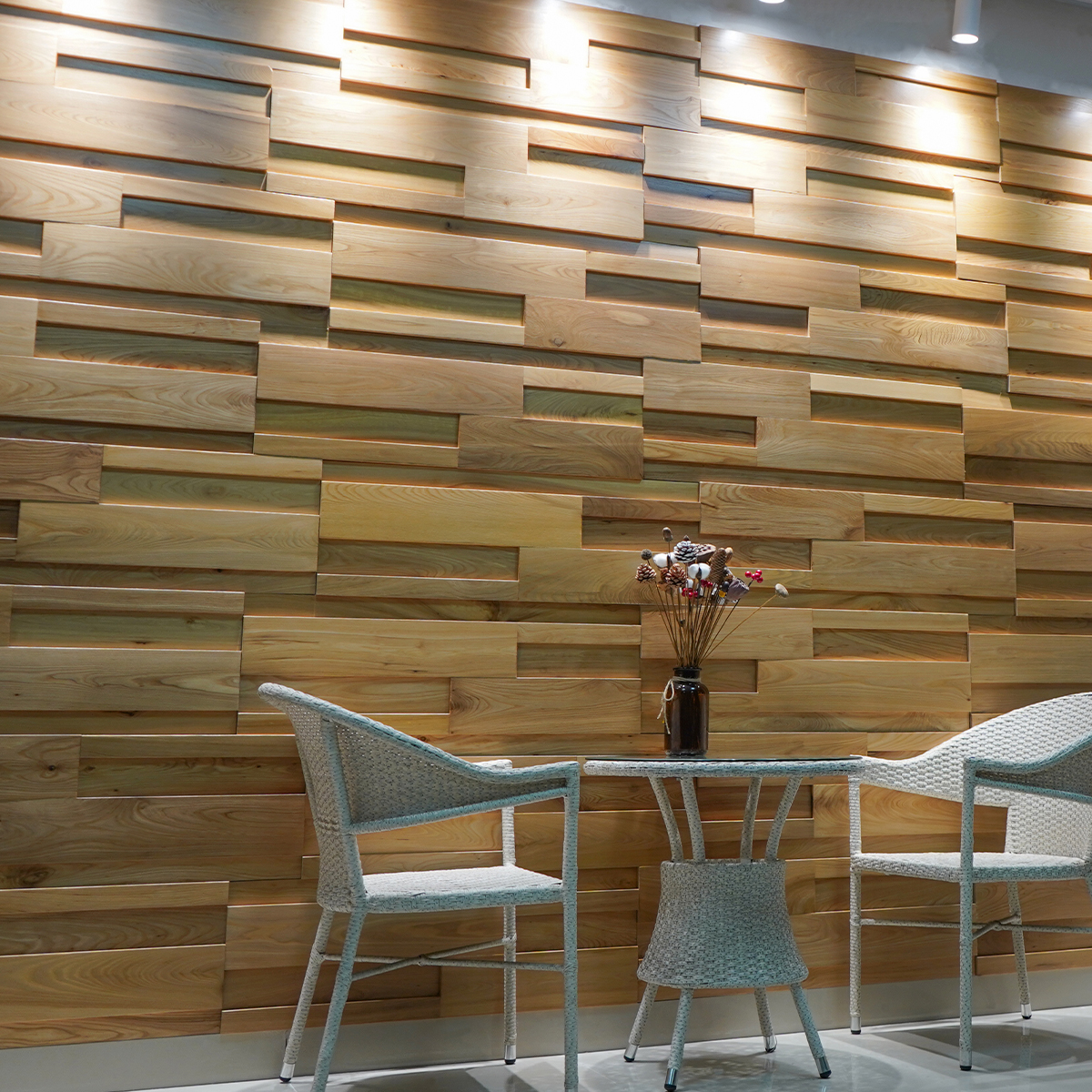
Elm Large Slab 3D Solid Wood Mosaic | Durability Analysis for Natural Grain-Focused Designs
Elm features bold, prominent grain with deep crevices. Shoddy sanding leaves burrs and caked paint buildup that ruins visual appeal and user experience. This style adopts hand sanding to clear dust and debris inside grain grooves, delivering a flat, smooth panel while retaining organic three-dimensional texture. A transparent eco protective topcoat seals color, repels moisture and blocks oxidation, stopping elm from darkening and developing mold spots from prolonged air exposure. The entire rear face is bonded and fixed with nylon mesh backing, which accommodates elm’s natural expansion and contraction properties and buffers deformation stress caused by temperature and humidity shifts, drastically cutting risks of cracking and individual tile falling off. With standardized sizing and tight splicing compatibility, it is suitable for full-home residential renovation, hotel public areas and office spaces, striking a perfect balance between cost performance and finished effect.
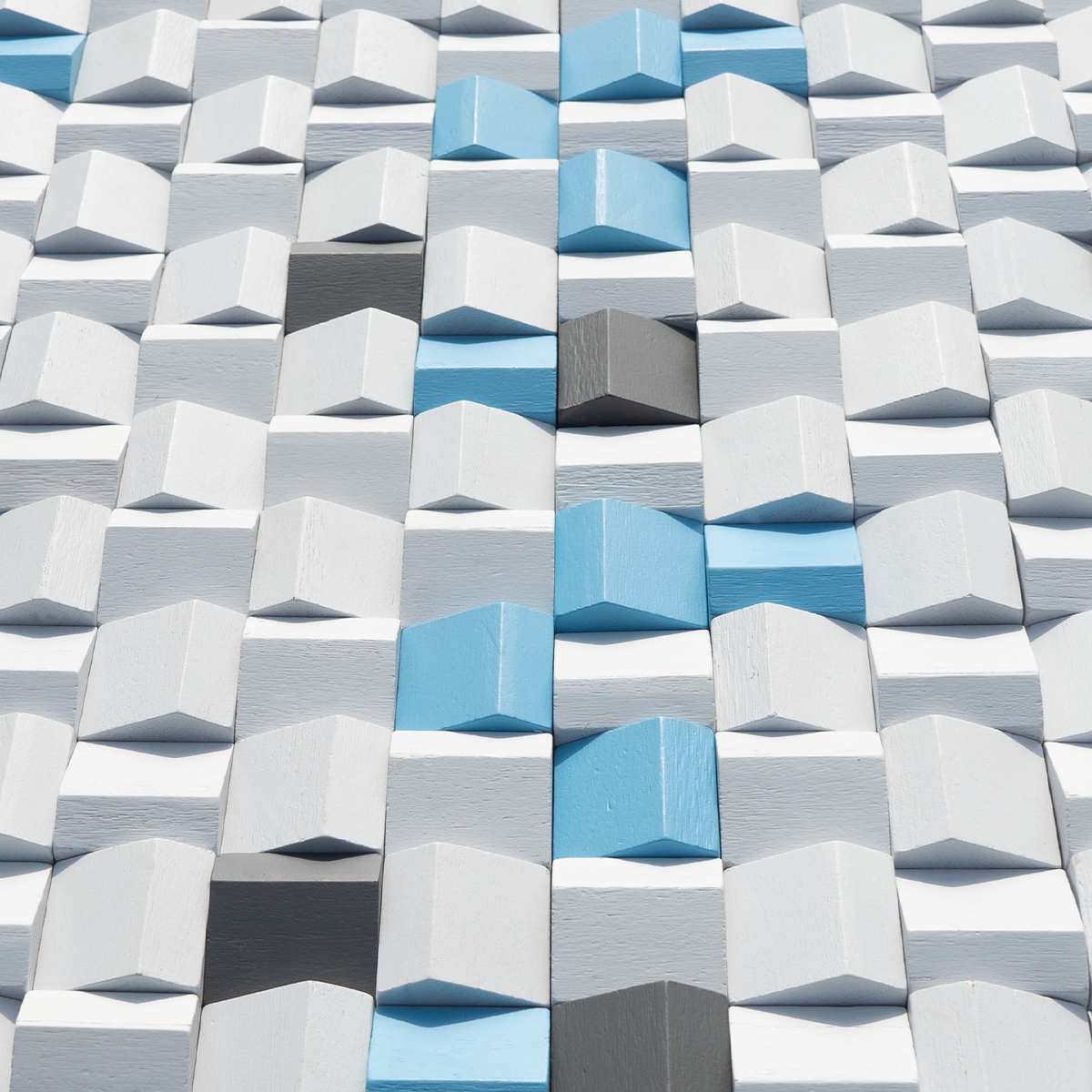
Lemon Eucalyptus Triangular Blue-Gray Art Mosaic | Key Inspection Points for Color-Coated Products
Color-coated mosaics see the biggest quality gaps among budget alternatives, which commonly suffer from uneven paint thickness, surface-only pigment that rubs off, and obvious batch color deviation. This lemon eucalyptus triangular mosaic uses layered artistic multi-coat pigment application for strong color adhesion that never sits only on the surface. The soft, translucent blue, white and gray tones avoid cheap plastic-looking finish and resist fading under sunlight and daily abrasion.
Constructed from high-density lemon eucalyptus hardwood with precise pre-drying moisture control, it also uses full nylon mesh backing paired with customized reinforcement to prevent paint cracking and panel warping triggered by wood expansion and shrinkage. Triangular cutting demands strict edge trimming and flatness control, resulting in ultra-fine seams and uniform 3D elevation across the whole piece. It works perfectly for boutique homestays, creative studios, trendy retail shops and personalized residential spaces as eye-catching feature walls.
Four Quick Self-Check Standards for Premium Solid Wood Mosaics
Surface Craftsmanship: Fully sanded with no grit or burrs; thin, even, translucent paint that does not obscure natural grain; no floating pigment or noticeable color difference on colored styles.
Wood Stability: Raw lumber goes through kiln drying and conditioning with moisture content held at 8%–12%, delivering anti-warping, moisture-proof and mold-proof performance.
Backing Substrate: Black walnut large square style uses plywood base reinforcement; elm and lemon eucalyptus lines adopt full nylon mesh bonding. Adhesion is firm with no hollow areas, and no detachment occurs with gentle bending.
Splicing Precision: Uniform dimensions within the same production batch; consistent seam width; standardized height of 3D profiles for seamless unified appearance after installation.
The texture and durability of solid wood mosaics do not rely on flashy shapes or heavy pigmentation. Their core value lies in easily overlooked processing steps and underlying backing structures. Only standardized full-process control — from lumber drying and surface sanding & coating to plywood or nylon mesh backing fixation — can produce solid wood accent walls that resist cracking, fading and aging gracefully long-term.
Supplementary Explanation
Plywood Backing Advantages: Higher load-bearing capacity and superior flatness. Large-format square panels resist bending and deformation, making it the top choice for full-wall large-area installation.
Nylon Mesh Backing Advantages: Greater flexibility allows minor bending to fit curved walls; less breakage during transportation and easier on-site cutting and installation.